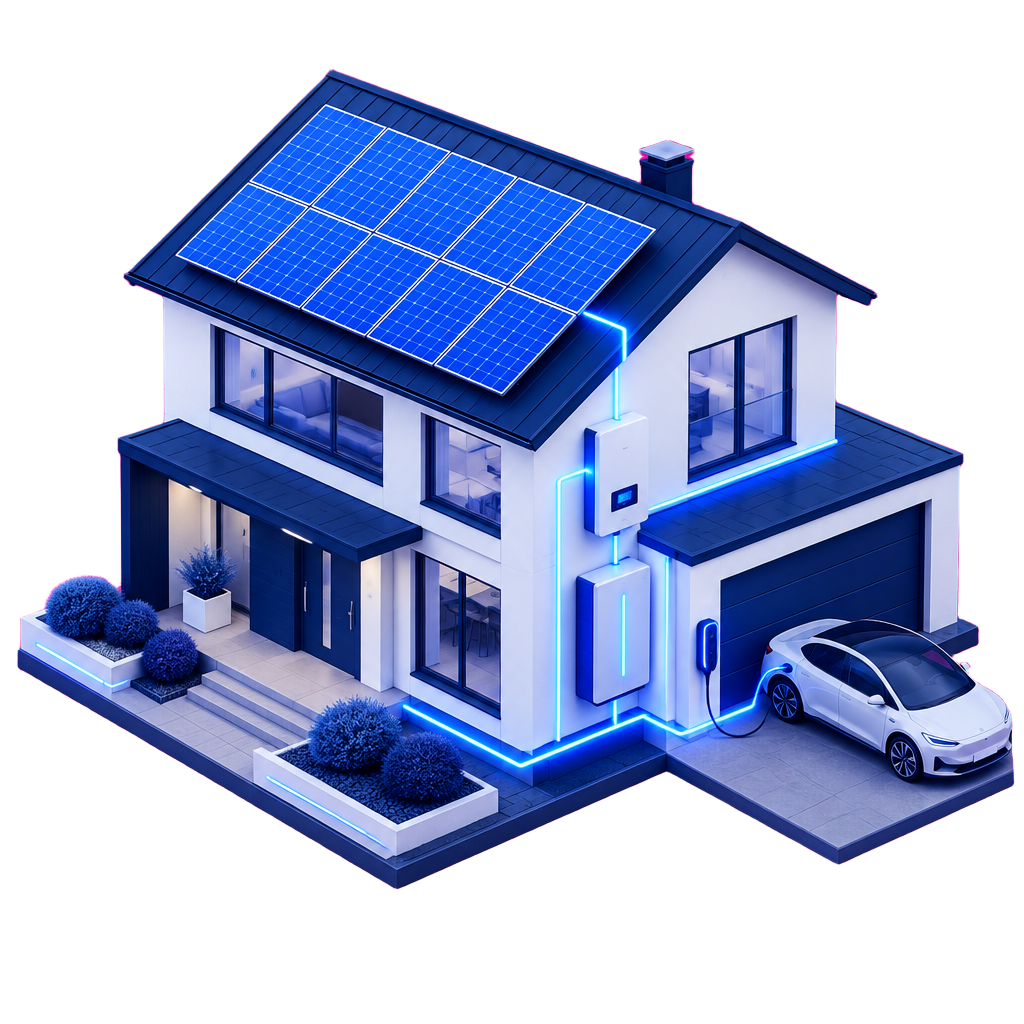
A few years ago, adding a battery to a residential solar system was an expensive extra that most homeowners skipped. In 2026, storage shows up in a large share of the solar proposals we review, and in some markets it is effectively the default. Utility rate structures, more frequent outages, falling cell costs, and smarter inverters have all pushed in the same direction. That is good news for homeowners, but it also makes proposals more complicated to evaluate. Here is what has changed and how we help customers compare options.
Why batteries became mainstream
The biggest driver is economics shaped by utility policy. Many utilities have moved away from simple net metering, where excess solar production earned close to retail credit, toward time-of-use rates and lower export compensation. Under those structures, a solar-only system sends a lot of its midday energy to the grid for relatively little credit, then the home buys expensive power back in the evening. A battery lets the home store that midday production and use it during the expensive evening hours, which can change the financial picture significantly.
The second driver is resilience. Extended outages from storms, heat waves, and wildfire-related shutoffs have made backup power a priority for many households. A properly configured battery can keep critical loads running, and paired with solar it can recharge during the day, extending backup well beyond what a battery alone could provide.
Chemistry and capacity
Most new home batteries now use lithium iron phosphate chemistry. Compared with older lithium chemistries, it trades a little energy density for longer cycle life, better thermal stability, and a strong safety profile, which is exactly what you want in a garage or on an exterior wall. Capacities have grown as well, and modular systems make it easier to start with one unit and add more later.
When we size storage, we start from loads rather than from the biggest number on the quote. What do you need to keep running during an outage: refrigerator, internet, lights, a well pump, medical equipment, a furnace blower? How long do typical outages last in your area? How much evening usage do you want to shift? Those answers determine usable capacity and, just as importantly, continuous and surge power output, which decides whether the battery can actually start a motor or run several appliances at once.
Inverters got smarter
Inverter technology has quietly improved a lot. Hybrid inverters that manage solar, battery, and grid in one unit are common, and many systems now support more sophisticated energy management: prioritizing self-consumption, charging from the grid when power is cheap, reserving a set percentage for backup, and responding to utility signals. Some utilities and third parties run programs that pay homeowners to let their batteries support the grid during peak events.
These features are valuable, but they vary widely between products. When reviewing a proposal, we look at whether the system supports whole-home or partial backup, how it transitions during an outage, whether it can expand, how its monitoring works, and whether it is compatible with programs available in your area.
Whole-home versus critical-loads backup
One of the most important design choices is what the battery actually backs up. Whole-home backup requires enough power output to handle everything in the house, often multiple batteries, and sometimes a main panel upgrade or smart panel. Critical-loads backup moves selected circuits to a dedicated subpanel and keeps only those running, which can be achieved with less storage and lower cost.
Smart panels and load controllers blur the line by allowing the system to shed large loads automatically during an outage. That can let a moderately sized battery support a home more comfortably. These choices involve electrical work that must be designed and installed by licensed professionals, and we coordinate with your installer and electrician rather than replacing them.
EV charging changes the math
Electric vehicles add a large, flexible load to the home. A Level 2 charger typically needs a dedicated circuit, and adding one can push an older electrical service toward its limits. Some EVs and chargers now support bidirectional power, letting the car supply the home during an outage. The capability is promising, but compatibility between vehicle, charger, inverter, and utility rules is still uneven, so we treat it as a specific question to verify rather than an assumption.
Ownership models still matter most
Hardware gets attention, but ownership structure often matters more to long-term value. Buying with cash or a loan means you own the system and receive any applicable incentives directly. Leases and power purchase agreements can reduce upfront cost but transfer incentives to the provider, often include price escalators, and can complicate selling the home. Incentive programs and tax credits change over time and depend on your situation, so we always recommend confirming eligibility with a qualified tax professional rather than relying on a sales projection.
The questions we ask on every proposal
When a customer sends us a solar and battery proposal, we work through a consistent set of questions. What production estimate is assumed, and what shading and orientation data supports it? What rate plan was used for the savings projection, and does it reflect current utility policy? What is the usable battery capacity and the continuous power output? Which loads will be backed up, and is a panel upgrade required? What warranties cover panels, inverter, battery, and workmanship, and who services them? What happens if you sell the house? Is the installer licensed, insured, and established in your area?
Clear answers to those questions usually reveal whether a proposal is solid or whether it leans on optimistic assumptions.
Procurement and installation through certified partners
FlashRate helps customers understand and compare their options, and through our vendor network we can connect you with certified solar installers and electricians in your region. We help gather equipment specifications, compare quotes on equal terms, and prepare questions for your installer. Licensed professionals perform all design, permitting, and installation work. Our goal is simple: that you sign a solar and storage agreement knowing exactly what you are buying and why.